
Three Prisons: An Afghan Mother's Memoir of Survival
Developed, produced, wrote, directed, edited & sound designed a 3-hour interview-based memoir. Listen on Audible.
February 18, 2024. I got an email from an Executive Producer at Audible: any interest in producing Part 2 of a memoir for an Afghan woman named Foroozan? My task would be to interview Foroozan in Persian/Dari and then produce a 1.5 hour memoir in Foroozan’s words, with recreations of story-critical text messages and phone calls, all of which would be read by an actress in English, and formed into the final audiobook.
For the rest of that year, I threw myself into this project. It was one of the most meaningful production experiences of my career yet.
The team was Executive Producers Kiana Hayeri (award winning NYT and Nat Geo photo journalist), Atossa Leoni (Actress known for her role in Kite Runner), Rachel Hamburg (of Audible) and my story editor, Sharon Mashihi (of Appearances).
Before I joined the team, Part 1 had already been written. It told the life story of our Afghan heroine, Foroozan, as she became trapped in a brutally violent marriage.
Part 1: Surviving A Marriage
Just as Audible was preparing to release Part 1 of the story in summer of 2021, the US announced its plans to withdraw troops from Afghanistan, and the Taliban quickly took over. This put Foroozan acutely at risk, in part because she had told her story of domestic abuse and self defence to a western journalist (Kiana Hayeri).
As the Taliban started to take over Afghanistan, Kiana had a choice to make: would she stand behind a line of journalistic “objectivity,” or would she try to help Foroozan escape Afghanistan? Kiana, Atossa Leoni (who knew of Foroozan because she had narrated the draft of Part 1), and many others started a mission to help Foroozan escape.
Part 2 of the memoir is the story of this escape, and it’s where I joined the project.
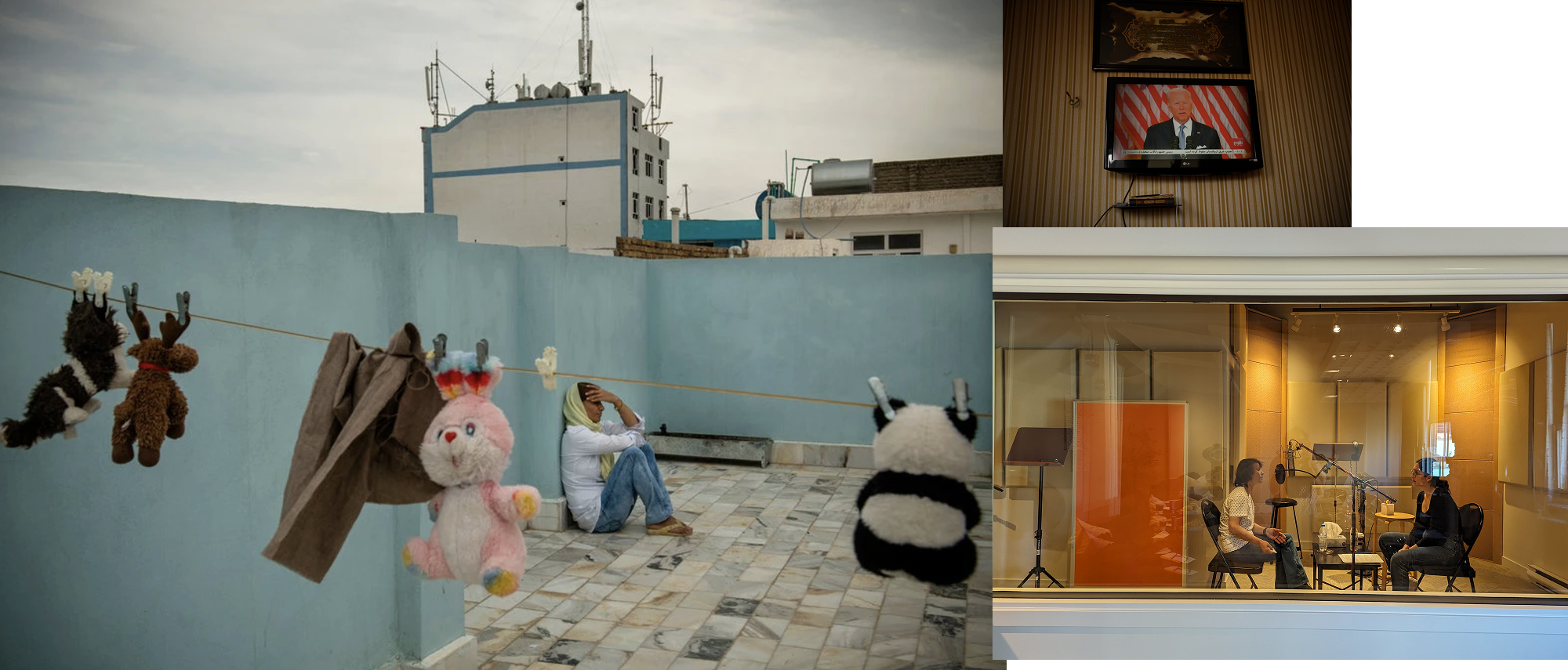
After surviving years in an abusive marriage, Foroozan made an unthinkable choice to protect her children. When her decision put her behind the bars of an Afghan women’s prison, she was surprised to discover her first taste of freedom. Years later, during the pandemic, Foroozan was released from prison.
Part 2: Political Abandonment
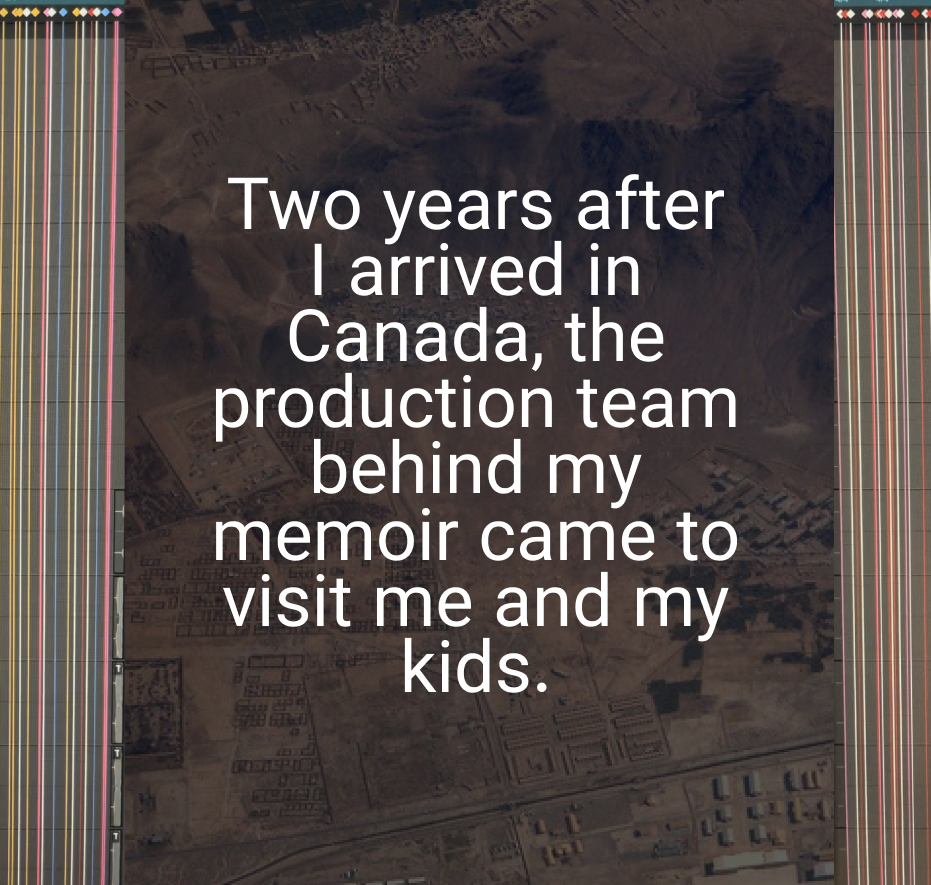
I went back to my Human Rights Watch trauma-based reporting notes and studied up. I wanted my interview with Foroozan to do her the least amount of harm possible. I went on a field trip to capture the team’s reunion with Foroozan and do three days of straight interviews. I also interviewed the executive producers for their side of the story: their memories, texts, diaries, documents–that supported Foroozan’s escape account.
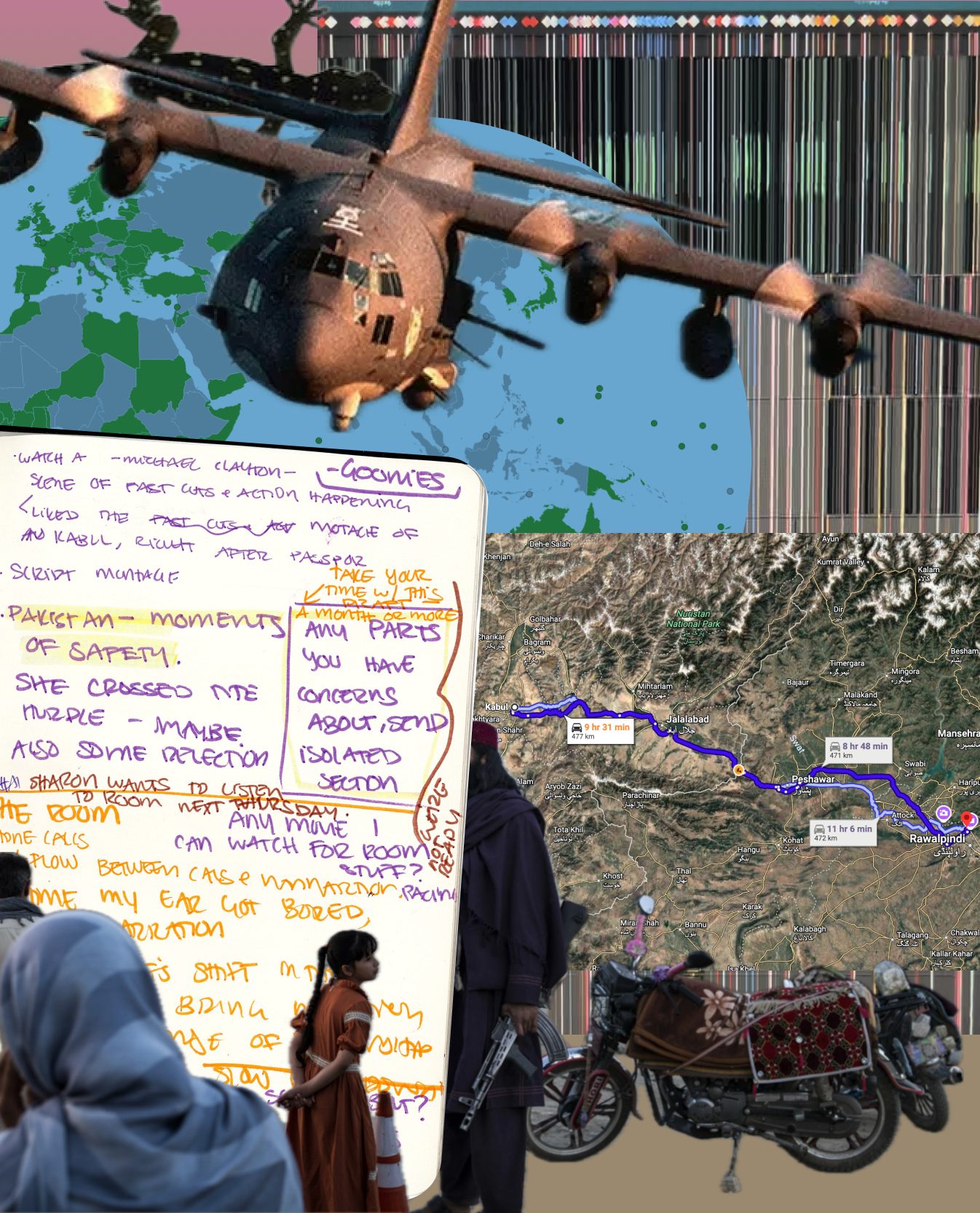
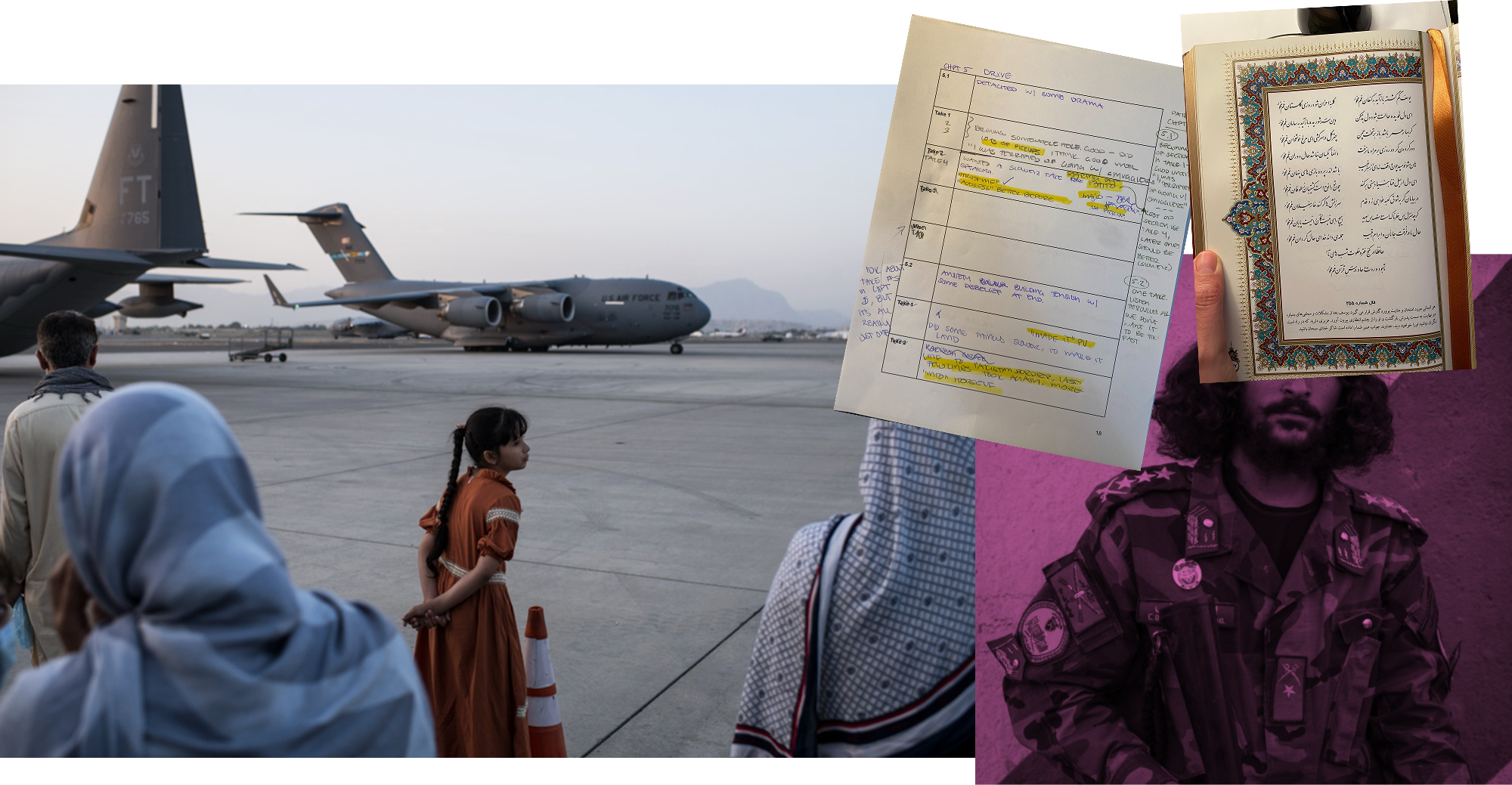
And then I got to writing. Script after script after script. As my story editor, Sharon Mashihi, and I learned, the escape from Kabul was complicated and life-or-death.
Figuring out how to tell the story of what actually got Foroozan to Canada was one of the most creatively challenging parts of this project. Sharon and I were trying to translate the feeling of waiting, of being stuck in the unknown and only relying on faith in other people to give you hope. We went through many drafts and checked in with Atossa and Foroozan to make sure these sections were representative of their experience.
Our final cut was a result of all this work, and a collaboration with composer Gary Gunn on original tracks. Working with him to create a sonic universe for this memoir, and getting to edit and sound design it myself were some of the most rewarding, full-circle parts of this production for me.
With everything at stake, Foroozan had to navigate a maze of harrowing choices to survive and secure her children's future. At one point, the escape from Afghanistan required Foroozan and her two daughters to hide in a small dark room in Pakistan for months. Her main daily anchor to the outside world became actress and Executive Producer Atossa Leoni. At this point, Foroozan only knew of Atossa as a friend trying to help. She didn’t yet realize that Atossa was performing as her in the audiobook, or that she had managed to take Foroozan’s case high up in the US Government, seeking the help of Lee Wolosky, Hakeem Jeffries and even Hillary Clinton.
Reunion
Foroozan’s story of escape is extraordinary: a true showing of courage and resourcefulness in the face of violence, war, and political abandonment. Unfortunately, it’s all too relevant and relatable in today’s world. For me as an Iranian immigrant and storyteller in the US, this story was very close to home, as it was for the entire production team.
For all of us on the team, there was never a time we didn’t have to ask ourselves hard questions about this production. How do you tell a memoir with input from other perspectives? How do you make space for everyone’s individual feelings when recounting an extremely intense period of time? With the amount of trauma Foroozan experienced, would it be better for her to leave it in the past or share her story? The answer changes day by day.
In the end, I’m proud of the work we did together. I think about Foroozan often, holding her perspective on life, faith and justice …it’s changed a bit of how I move through the world. I’m grateful that she shared so much of herself with us, and I hope you’ll listen to her story yourself.
Select Projects

StoryCorps Mobile Tour
30 Days to Rediscover Your Creativity with Sharon Mashihi
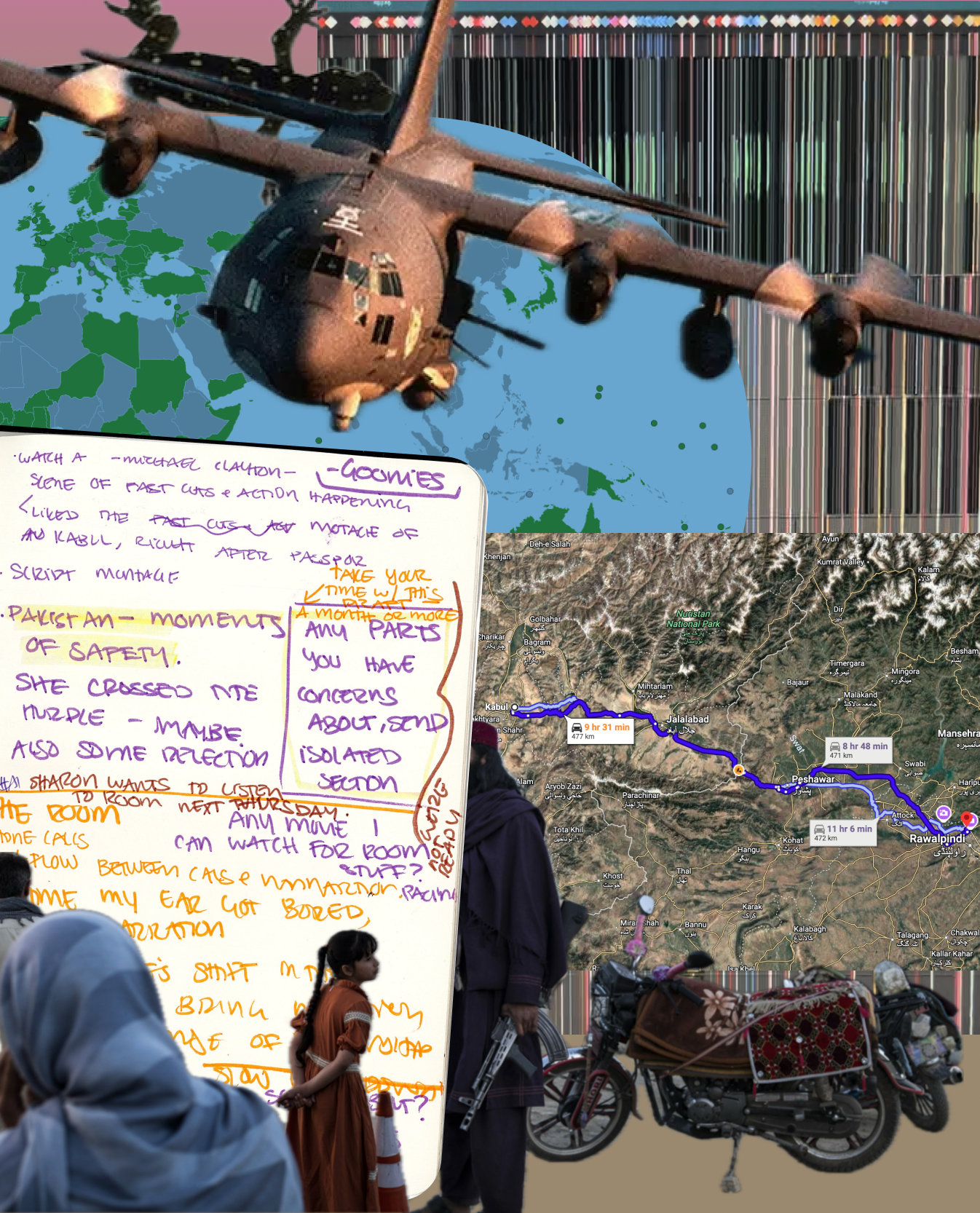
Three Prisons: An Afghan Mother's Memoir of Survival